
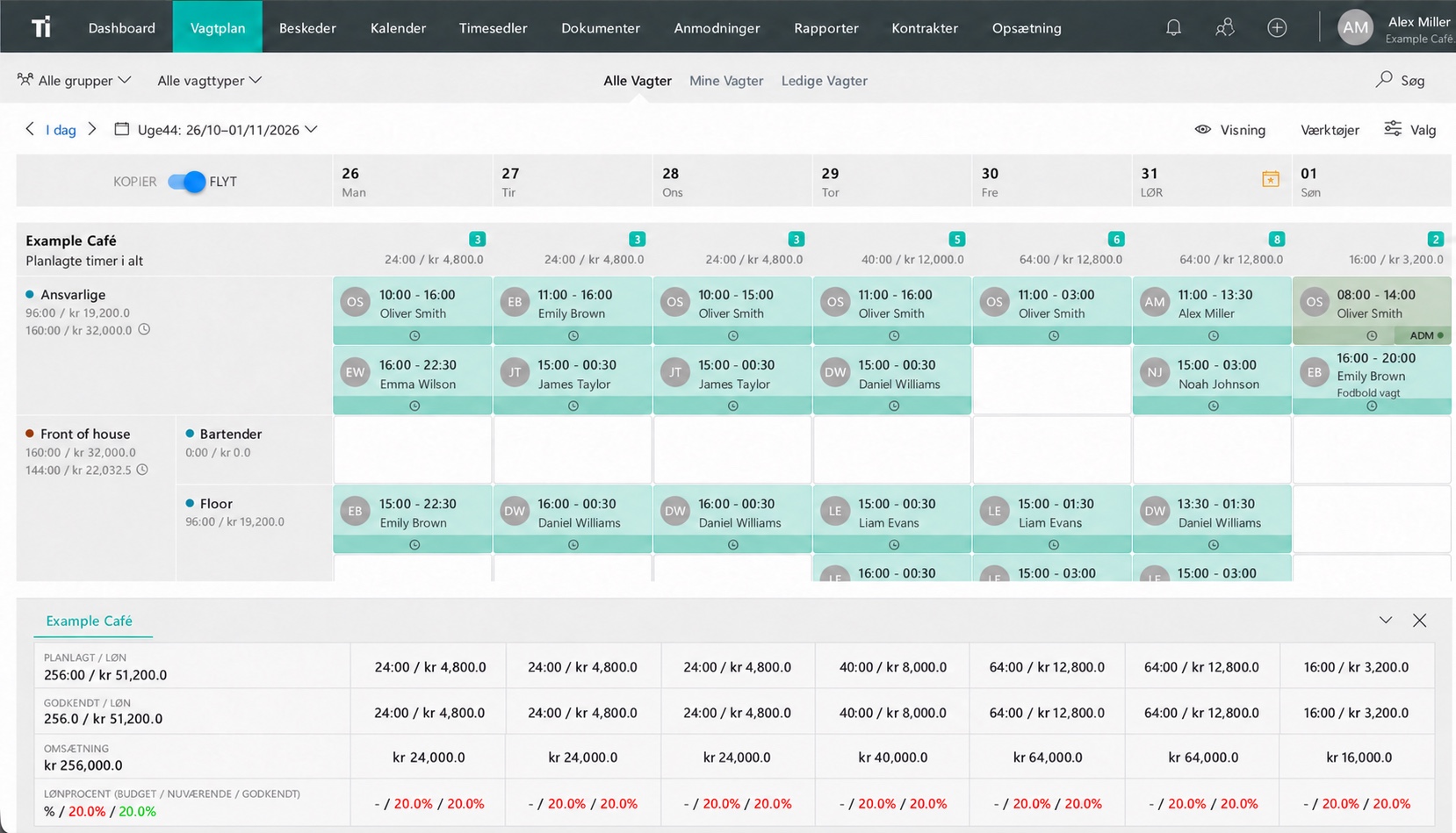
Map the whole day
Start with deliveries, food preparation, reservations and the team briefing. Then add service, dishwashing, cleaning and closing. Write down when the work happens and which roles it needs.
Use reservations alongside expected walk-ins, events and recurring tasks. Talk to the kitchen and front-of-house teams separately: a quiet dining room may coincide with a busy preparation period in the kitchen. Mark estimates so you can review them afterward.
Check coverage by role
This example shows the work to cover during an evening service. Add your own times and staffing levels for the restaurant.
| Phase | Kitchen | Front of house | Check |
|---|---|---|---|
| Preparation | Prep work | Setting up | Who handles deliveries and briefing? |
| Peak service | Cooking and washing up | Hosting, serving and bar | Are all essential roles covered? |
| Closing | Cleaning and finishing | Register closeout and clearing | Who is responsible for closing? |
When one person covers several roles, check whether the tasks can happen at the same time. Include someone who can handle opening, closing and any other responsibility that requires specific training.
Allow time for handovers and training
Place handovers around the work that needs passing on. A short overlap before a busy service can give the incoming team time to hear about reservations, shortages or a change in the kitchen.
Review whether that overlap happens at the right time. Include training too: an experienced employee supporting a new starter has less time for their own tasks. Show who is helping the newcomer so the shift has realistic coverage.
Make changes easy to handle
Tell employees who to contact when they cannot work and who decides how to cover the shift. Have a direct contact route for urgent sickness rather than relying on someone reading a group message.
For a swap, check the skills and responsibilities left on each shift. If the change removes the only closing lead, you still need a solution. Our shift swap guide explains a simple request and approval process.
Once a change is approved, update the schedule and make sure the people involved know when and where they are working.
Review the service before planning the next one
Note what would change your next staffing decision: a queue at the bar, a delayed delivery, an unexpectedly busy lunch or a close that took longer than planned. Keep the note tied to the time it happened.
Compare scheduled hours, recorded time and sales. The labor cost percentage calculator helps you compare staffing costs with sales on a consistent basis. Complete the timesheet review while any late finishes or corrections are still easy to explain.
Try your next service in TitanPlan
To try the process in TitanPlan, build a week in staff scheduling using your own kitchen and front-of-house roles. Ask employees to find their shifts and work through a change together.
Questions and answers
What should a restaurant schedule include?
Preparation, service, handovers, training and closing. Assign people after you have identified the roles and coverage each stage needs.
Can we plan from reservations alone?
Include expected walk-ins and the work around service too, such as deliveries, preparation, cleaning and closing.
What should we check before approving a swap?
Check the replacement’s skills, closing or opening responsibilities, agreed hours and the working-time rules that apply.